
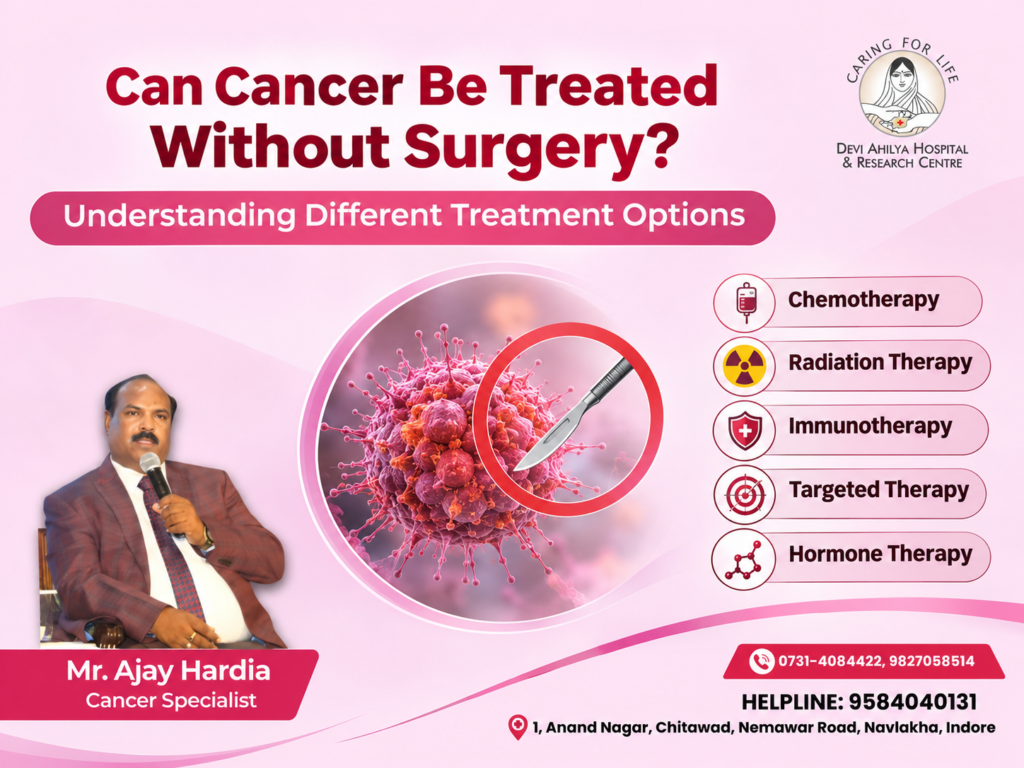
ancer treatment has advanced significantly over the years, offering patients several treatment options depending on the type, stage, location, and biological characteristics of the disease. One common question among patients and families is: Can Cancer Be Treated Without Surgery? The answer is yes, in certain situations.
For patients researching Cancer Treatment in Indore, understanding non-surgical treatment options can help them make informed decisions. People living in Anand Nagar, Chitawad, Teen Imli, Sajan Nagar, Navlakha, Palda, Musakhedi, and nearby areas may also want to understand when surgery is necessary and when another treatment may be appropriate.
Cancer Treatment Without Surgery does not mean avoiding all medical treatment. Depending on the diagnosis, patients may require medicines, radiation sessions, diagnostic investigations, and regular follow-up. The main goal is to choose a treatment that provides the best possible outcome while considering potential risks and quality of life.
Can Cancer Be Treated Without Surgery?
The question Can Cancer Be Treated Without Surgery? does not have one answer for every patient. Cancer includes many different diseases, and each type responds differently to treatment.
Some blood cancers are primarily treated with medicines rather than surgery. Certain localized cancers may be treated with radiation therapy, while other cancers may respond to targeted therapy, immunotherapy, or hormone therapy.
For patients exploring Non-Surgical Cancer Treatment, the decision depends on the cancer type, stage, tumor characteristics, and treatment goals. In some cases, non-surgical treatment may provide an effective alternative to an operation. In others, surgery may offer the best chance of removing the tumor and controlling the disease.
Therefore, patients should not reject surgery or select an alternative treatment without discussing the expected benefits and risks with their oncology team.
When Can Cancer Treatment Be Given Without Surgery?
Whether Cancer Treatment Without Surgery is suitable depends on several important factors.
1. Type of Cancer
Different cancers respond differently to treatment.
2. Stage of Cancer
The stage indicates how far cancer has progressed and whether it has spread to other parts of the body.
3. Tumor Characteristics
Pathology reports and biomarker testing can help doctors understand the biological characteristics of a tumor. Some cancers have molecular changes that make targeted therapy or immunotherapy appropriate.
4. Overall Health
A patient’s age, existing medical conditions, organ function, nutritional status, and ability to tolerate treatment may influence the recommended approach.
5. Treatment Goals
Treatment may aim to cure cancer, reduce the risk of recurrence, control disease progression, or relieve symptoms. The appropriate treatment depends partly on these goals.
Patients looking for a Cancer Specialist in Indore should discuss these factors before deciding whether surgery is necessary.
Cancer Treatment Options Without Surgery
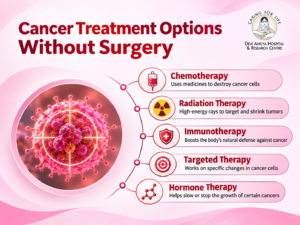
Several evidence-based approaches may be used without surgery in selected cases. The suitability of each option depends on the specific cancer diagnosis.
Radiation Therapy
Radiation therapy uses high-energy radiation to damage cancer cells and prevent them from growing and dividing. It can be used to cure certain cancers, reduce recurrence risk, shrink tumors, or relieve symptoms.
For selected cancers, radiation therapy may serve as the primary treatment without an operation. In other cases, it may be combined with chemotherapy or another treatment.
Patients researching Non-Surgical Cancer Treatment in Indore should ask their doctor whether radiation therapy is appropriate for their specific diagnosis.
Chemotherapy
Chemotherapy uses medicines to kill cancer cells or slow their growth. It may be given intravenously or orally, depending on the treatment regimen.
For certain cancers, chemotherapy is the main treatment. In other situations, it is combined with radiation therapy, surgery, immunotherapy, or targeted therapy.
Possible side effects include fatigue, nausea, changes in blood counts, and hair loss with certain medicines. The type and severity of side effects vary between patients.
Immunotherapy
Immunotherapy helps the immune system recognize and fight cancer cells. It may be suitable for selected cancers depending on their type, stage, biomarker findings, and previous treatments.
Some patients receive immunotherapy without surgery, while others need a combination of treatments. Immunotherapy is not suitable for every cancer and requires medical monitoring.
Targeted Therapy
Targeted therapy focuses on specific proteins or molecular changes involved in cancer growth. Doctors may recommend biomarker testing to determine whether a particular medicine is likely to work.
In some cancers, targeted therapy may control the disease without surgery. However, this option is available only when the cancer’s characteristics support its use.
Hormone Therapy
Some breast and prostate cancers depend on hormones to grow. Hormone therapy works by reducing hormone production or blocking hormone effects on cancer cells.
For selected patients, it can be an important part of Cancer Treatment Without Surgery. Its suitability depends on the cancer’s hormone sensitivity, stage, and overall treatment goals.
Chemoradiation
Chemoradiation combines chemotherapy and radiation therapy. It may be used as the primary treatment for certain cancers, including selected cancers of the cervix, head and neck, and anal region.
For some patients, this approach may avoid an operation. The decision depends on the diagnosis, expected outcomes, and response to treatment.
Other Specialized Treatments
Certain patients may be eligible for specialized treatments such as radiofrequency ablation, cryoablation, photodynamic therapy, or radiopharmaceutical therapy. These approaches are appropriate only for specific indications and should not be considered universal alternatives to surgery.
Clinical trials may also provide access to investigational treatments for eligible patients.
Can Cancer Be Treated Without Surgery in Early-Stage Cancer?
For some early-stage cancers, Can Cancer Be Treated Without Surgery? Yes, depending on the cancer type and the expected response to treatment.
Certain localized cancers may be treated with radiation or another cancer-specific approach. Doctors consider pathology findings, tumor location, size, grade, and other clinical factors before recommending a treatment plan.
Important factors include:
- Tumor size and location
- Cancer type and subtype
- Tumor grade
- Lymph-node involvement
- Biomarker results
- Risk of recurrence
- Expected response to radiation or medicines
- Overall health of the patient
Early-stage cancer does not automatically mean surgery can be avoided. Patients should ask their oncology team to explain the expected benefits, risks, and long-term outcomes of both surgical and non-surgical approaches.
Can Cancer Be Treated Without Surgery in Advanced Cancer?
When cancer spreads to distant organs, treatment often involves systemic medicines because cancer cells may be present in multiple locations.
Depending on the diagnosis, treatment may include chemotherapy, immunotherapy, targeted therapy, hormone therapy, or other specialized medicines. Radiation therapy may also help control particular tumors or relieve symptoms.
Surgery is not always the main treatment for advanced cancer, although it may be useful in selected circumstances.
Patients searching for a Cancer Hospital in Indore should ask whether the center can coordinate the medical oncology, radiation oncology, diagnostic, and supportive services needed for their condition.
Can Cancer Be Treated Without Surgery Using Natural Remedies?
Some patients explore herbal products, special diets, vitamins, or supplements because they are concerned about surgery and treatment side effects.
A balanced diet, adequate sleep, appropriate physical activity, and emotional support may help general wellbeing during cancer care. However, these measures are not proven substitutes for cancer treatment.
No special diet, herb, vitamin, or supplement has been proven to universally cure cancer. Some supplements may also interact with prescribed medicines.
Patients considering Alternative Cancer Treatment Options should discuss them with their oncology team before use. Replacing an effective treatment with an unproven remedy may delay care and allow the disease to progress.
Risks of Avoiding Surgery When It Is Recommended
Although some cancers can be treated without surgery, an operation may be essential for treating certain localized tumors.
Avoiding recommended surgery without reviewing the alternatives may increase the risk of cancer progression or recurrence. Possible risks include:
- Continued tumor growth
- Spread of cancer to other organs
- Development of additional symptoms
- Loss of an opportunity for curative treatment
- Need for more extensive treatment later
- Reduced chance of disease control in some situations
These risks depend on the individual diagnosis. Patients concerned about surgery should discuss their worries with a qualified surgeon or oncologist. A second opinion may help clarify whether another evidence-based treatment is appropriate.
How Doctors Decide Whether Surgery Is Necessary
Doctors consider several factors before recommending surgery or a non-surgical approach.
Step 1: Confirm the Diagnosis
A biopsy and pathology evaluation generally establish the cancer type and provide important information about the tumor.
Step 2: Determine the Stage
Imaging and other investigations help determine the tumor’s size, location, and whether cancer has spread.
Step 3: Evaluate Tumor Biology
Biomarker or molecular testing may identify whether targeted therapy, immunotherapy, or hormone therapy could be appropriate.
Step 4: Compare Treatment Options
The oncology team evaluates surgery, radiation therapy, medicines, and specialized procedures according to the diagnosis.
Step 5: Discuss Benefits and Risks
Doctors explain the expected effectiveness, potential side effects, recovery requirements, and possible long-term outcomes.
Step 6: Establish a Follow-Up Plan
Regular appointments, imaging, laboratory tests, and clinical assessments may be needed to evaluate treatment response and monitor for recurrence.
Benefits of an Individualized Cancer Treatment Plan
A personalized treatment plan helps ensure that care is selected according to the patient’s medical needs.
Important benefits include:
- Treatment based on the confirmed diagnosis
- Assessment of cancer stage and tumor biology
- Identification of suitable non-surgical options
- Better understanding of treatment-related side effects
- Evaluation of recurrence risk
- Appropriate use of biomarker testing
- Coordination between specialists
- Monitoring of treatment response
- Symptom management and supportive care
- Informed discussions about second opinions
For patients considering Cancer Treatment Without Surgery, individualized assessment is essential because the most appropriate treatment can vary considerably between cancer types.
Cancer Treatment in Indore: Nearby Areas We Cover
Patients researching cancer treatment may search for information using the names of their locality or nearby landmarks. The following location-based phrases relate to the area around Anand Nagar and Chitawad in Indore.
Cancer Treatment in Anand Nagar, Indore
People in Anand Nagar may search for information about cancer diagnosis, specialist consultations, and treatment options. The most appropriate care depends on the patient’s diagnosis and the services available at the selected medical center.
Cancer Treatment in Chitawad, Indore
Residents of Chitawad may seek information about surgical and non-surgical cancer treatments. A consultation can help determine whether radiation therapy, medicines, surgery, or a combination is appropriate.
Cancer Treatment Near Teen Imli, Indore
Patients searching near Teen Imli may want to understand different cancer treatment approaches, their potential side effects, and the investigations required before treatment.
Cancer Treatment Near Sajan Nagar, Indore
For people in Sajan Nagar, discussing treatment options with qualified cancer specialists can help clarify whether surgery is necessary or whether a non-surgical approach may be suitable.
Cancer Treatment Near Navlakha, Indore
Patients from Navlakha may research cancer specialists and hospitals that can coordinate diagnosis, treatment planning, and follow-up care.
Cancer Treatment Near Palda, Indore
Residents of Palda may need information about available cancer treatment approaches, diagnostic services, and specialist consultations.
Cancer Treatment Near Musakhedi, Indore
People searching from Musakhedi may explore medical oncology, radiation therapy, and other cancer care options according to their diagnosis.
Other Nearby Locality Searches
Additional relevant local SEO phrases include:
- Cancer Treatment near Shivmoti Nagar, Indore
- Cancer Treatment near Kaushalyapuri, Indore
- Cancer Treatment near Prakash Nagar, Indore
- Cancer Hospital near Anand Nagar, Indore
- Cancer Specialist near Chitawad, Indore
- Non-Surgical Cancer Treatment in Indore
These are location-based search terms, not claims that a particular hospital has a branch or treatment center in every locality. Patients should confirm the actual address and available services before visiting.
How to Choose a Cancer Hospital in Indore
Choosing a suitable cancer care center involves reviewing the medical services, specialist qualifications, diagnostic facilities, and treatment options available.
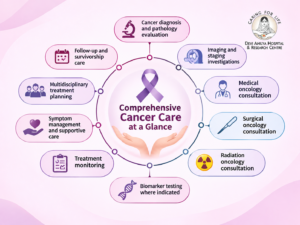
A cancer care center may provide or coordinate:
- Cancer diagnosis and pathology evaluation
- Imaging and staging investigations
- Medical oncology consultation
- Surgical oncology consultation
- Radiation oncology consultation
- Biomarker testing where indicated
- Treatment monitoring
- Symptom management and supportive care
- Multidisciplinary treatment planning
- Follow-up and survivorship care
Patients looking for a Cancer Hospital in Indore should ask about the specific services available for their diagnosis, the experience of the treating specialists, expected outcomes, possible side effects, and treatment costs.
Patients from Anand Nagar, Chitawad, Teen Imli, Sajan Nagar, Navlakha, Palda, and Musakhedi can use these questions when comparing care options. The right treatment center should be selected according to medical needs rather than locality keywords alone.
About Devi Ahilya Cancer Hospital
Devi Ahilya Cancer Hospital is described in the supplied hospital information as a cancer care facility in Indore, Madhya Pradesh. The supplied information describes a 100-bed facility focused on cancer care and related services.
Patients researching Cancer Treatment in Indore should verify the hospital’s current address, services, clinical team, and treatment facilities directly with the institution.
Meet Our Outstanding Team
Dr. Ajay Hardia – Director
According to the supplied hospital information, Dr. Ajay Hardia is associated with the leadership of Devi Ahilya Hospital & Research Centre and the National Institute of Electro Homoeopathy.
Patients should verify the qualifications and clinical roles of the professionals involved in their cancer care. Treatment decisions should be based on a confirmed diagnosis and evidence supporting the proposed approach.
How to Choose the Right Cancer Treatment?
When considering Can Cancer Be Treated Without Surgery?, patients should discuss the following questions with their oncology team.
1. What Type of Cancer Do I Have?
The exact cancer type and subtype help determine which treatments are most likely to be effective.
2. What Is My Cancer Stage?
The stage helps establish whether the disease is localized or has spread.
3. Is Surgery Necessary in My Case?
Ask why surgery is recommended and what benefit it is expected to provide.
4. Are There Evidence-Based Alternatives?
Depending on the diagnosis, ask whether radiation therapy, chemotherapy, immunotherapy, targeted therapy, or hormone therapy may be appropriate.
5. Would Biomarker Testing Help?
For selected cancers, molecular testing may identify treatments that target specific tumor characteristics.
6. What Are the Benefits and Risks?
Discuss treatment effectiveness, side effects, recovery, and the risk of recurrence.
7. What Could Happen if I Delay Surgery?
Understanding the risks of delay is important before choosing a different treatment approach.
8. Should I Seek a Second Opinion?
A second opinion can help clarify the options when the diagnosis is complex or the treatment decision is uncertain.
Summary
The question Can Cancer Be Treated Without Surgery? is important for patients who are concerned about operations, recovery, or possible complications. The answer is yes for selected cancers, depending on the type, stage, tumor characteristics, and treatment goals.
However, surgery remains an important treatment for many localized solid tumors. Avoiding an operation without understanding its expected benefits can delay effective treatment or increase the risk of disease progression.
For patients researching Cancer Treatment in Indore, including those in Anand Nagar, Chitawad, Teen Imli, Sajan Nagar, Navlakha, Palda, and Musakhedi, consulting a qualified oncology specialist can help clarify the available options. A personalized treatment plan can help patients make informed decisions about their care.
Frequently Asked Questions (FAQs)
1. Can Cancer Be Treated Without Surgery?
Yes, some cancers can be treated without surgery. Radiation therapy, chemotherapy, immunotherapy, targeted therapy, or hormone therapy may be appropriate depending on the cancer type, stage, and treatment goals.
2. What Are the Main Non-Surgical Cancer Treatments?
The main options include radiation therapy, chemotherapy, immunotherapy, targeted therapy, hormone therapy, and chemoradiation. Certain specialized procedures may also be suitable for selected tumors.
3. Can Early-Stage Cancer Be Treated Without Surgery?
Some early-stage cancers can be treated with radiation or other non-surgical approaches. However, surgery may offer the best chance of cure for other tumors. The decision depends on the diagnosis and expected outcomes.
4. Can Advanced Cancer Be Treated Without Surgery?
Some advanced cancers are managed primarily with systemic medicines, including chemotherapy, immunotherapy, targeted therapy, or hormone therapy. The treatment depends on the cancer’s characteristics and extent of spread.
5. Can Cancer Be Treated Naturally Without Surgery?
There is no reliable evidence that special diets, herbs, or supplements can independently cure cancer. Supportive lifestyle measures may help general wellbeing but should not replace established cancer treatment.
6. Is Radiation Therapy an Alternative to Surgery?
Radiation therapy can be the primary treatment for selected cancers, but it is not a suitable replacement for surgery in every case.
7. Can Immunotherapy Treat Cancer Without Surgery?
Yes, immunotherapy may be used without surgery for selected cancers when the clinical findings support its use.
8. Should I Avoid Surgery if I Am Afraid of the Procedure?
Discuss your concerns with your oncology team. Ask about the expected benefits, risks, and evidence-based alternatives. A second opinion may help you make an informed decision.
9. Where Can I Find Cancer Treatment in Indore?
Patients can consult a qualified cancer specialist or multidisciplinary oncology team in Indore to review the diagnosis, stage, and available treatment options.
10. Which Areas Near Anand Nagar Can Be Included in Local Cancer Treatment Searches?
Relevant location-based searches include Anand Nagar, Chitawad, Teen Imli, Sajan Nagar, Shivmoti Nagar, Kaushalyapuri, Prakash Nagar, Navlakha, Palda, and Musakhedi in Indore. Patients should verify the actual location and services of the medical center they intend to visit.
Conclusion: Can Cancer Be Treated Without Surgery?
The answer to Can Cancer Be Treated Without Surgery? is yes for some patients, but not for everyone. Treatment depends on the type and stage of cancer, tumor biology, overall health, and treatment goals.
Modern cancer care offers several non-surgical options, including radiation therapy, chemotherapy, immunotherapy, targeted therapy, and hormone therapy. Patients should be cautious about unproven treatments that promise to cure cancer without surgery or established medical care. Avoiding surgery is not automatically safer, and delaying a recommended treatment may reduce the chance of successful disease control in some situations.
For patients seeking Cancer Treatment in Indore from Anand Nagar, Chitawad, Teen Imli, Sajan Nagar, Navlakha, Palda, Musakhedi, and nearby localities, consulting a qualified oncology specialist is an important step. A thorough medical evaluation and evidence-based treatment plan can help determine whether surgery is necessary or whether another treatment may be suitable.