
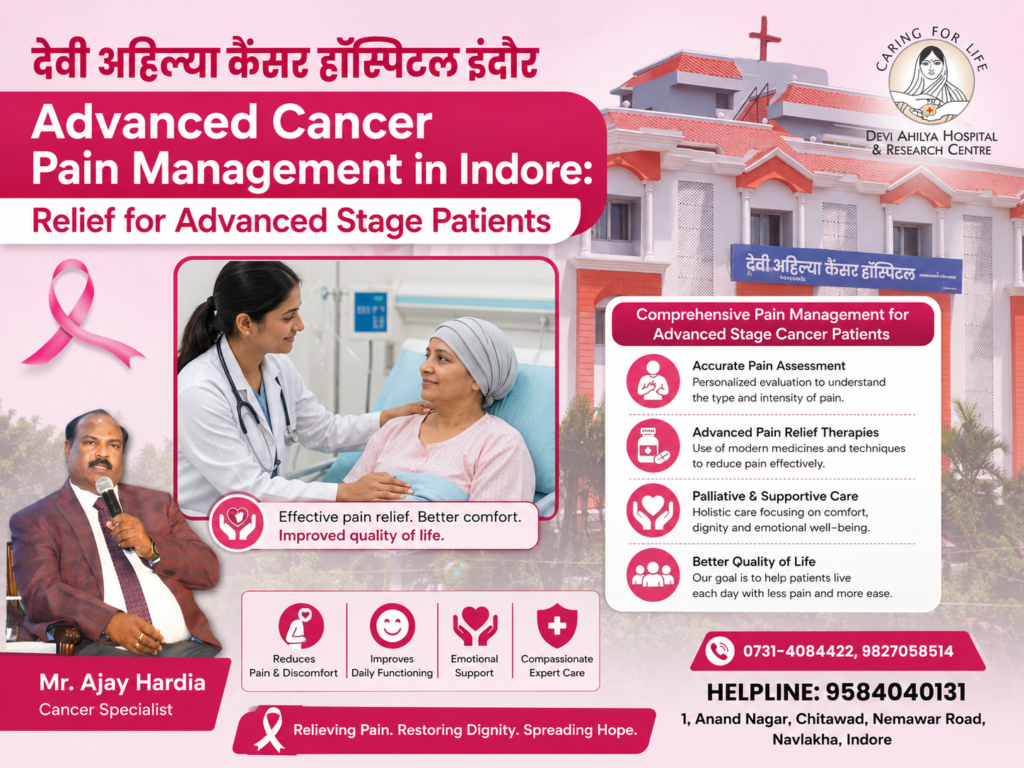
Cancer pain can be one of the most challenging aspects of living with advanced cancer. While modern cancer treatment focuses on controlling disease progression, effective pain management remains equally important in improving a patient’s quality of life, comfort, mobility, emotional well-being, and ability to perform daily activities.
Many patients and families believe that severe pain is an unavoidable part of advanced cancer. However, with proper cancer pain management, many patients can experience significant relief and maintain a better quality of life throughout their treatment journey.
At Devi Ahilya Cancer Hospital & Research Centre, Indore, Dr. Ajay Hardia and his team focus on a patient-centered approach that aims to support cancer patients through comprehensive pain management strategies, holistic care, supportive therapies, nutritional guidance, and emotional support.
Understanding Cancer Pain
Cancer pain can occur for several reasons.
Pain May Result From:
- The cancer itself
- Pressure on nerves
- Tumor growth
- Bone involvement
- Inflammation
- Side effects of treatments
- Surgical procedures
- Emotional stress associated with illness
The severity of pain can vary significantly from patient to patient.
Some individuals may experience mild discomfort, while others may face persistent pain that interferes with daily life.
Why Cancer Pain Should Never Be Ignored
Many patients delay discussing pain because they believe it is a normal part of cancer.
Ignoring Pain Can Lead To:
- Sleep disturbances
- Anxiety
- Depression
- Reduced mobility
- Loss of appetite
- Fatigue
- Emotional distress
- Reduced quality of life
Early intervention often leads to better symptom control and improved overall well-being.
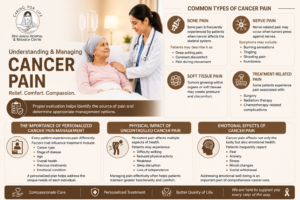
Common Types of Cancer Pain
Bone Pain
Bone pain is frequently experienced by patients when cancer affects the skeletal system.
Patients may describe it as:
- Deep aching pain
- Constant discomfort
- Pain during movement
Nerve Pain
Nerve-related pain may occur when tumors press against nerves.
Symptoms May Include:
- Burning sensations
- Tingling
- Shooting pain
- Numbness
Soft Tissue Pain
Tumors growing within organs or soft tissues may create pressure and discomfort.
Treatment-Related Pain
Some patients experience pain associated with:
- Surgery
- Radiation therapy
- Chemotherapy-related complications
Proper evaluation helps identify the source of pain and determine appropriate management options.
The Importance of Personalized Cancer Pain Management
Every patient experiences pain differently.
Factors That Influence Treatment Include:
- Cancer type
- Stage of disease
- Age
- Overall health
- Previous treatments
- Emotional condition
A personalized plan helps address the unique needs of each individual.
Physical Impact of Uncontrolled Cancer Pain
Persistent pain affects multiple aspects of health.
Patients May Experience:
- Difficulty walking
- Reduced physical activity
- Weakness
- Sleep disruption
- Loss of independence
Managing pain effectively often helps patients maintain greater functionality and comfort.
Emotional Effects of Cancer Pain
Cancer pain affects not only the body but also emotional health.
Patients Frequently Report:
- Fear
- Anxiety
- Stress
- Mood changes
- Social withdrawal
Addressing emotional well-being is an important part of comprehensive cancer care.
Holistic Approaches to Cancer Pain Management
Modern cancer care increasingly incorporates supportive and holistic approaches.
These May Include:
- Lifestyle modifications
- Nutritional support
- Stress reduction techniques
- Relaxation therapies
- Emotional counseling
- Wellness-focused interventions
Holistic care aims to improve overall quality of life.
Nutritional Support and Pain Management
Nutrition plays an important role in supporting patients during cancer treatment.
Proper Nutrition May Help:
- Maintain energy levels
- Support recovery
- Improve strength
- Enhance overall wellness
A personalized nutrition plan can contribute positively to the patient’s treatment experience.
Importance of Family Support
Cancer affects the entire family.
Family Support Can Help Patients:
- Feel emotionally secure
- Stay motivated
- Follow treatment recommendations
- Manage stress more effectively
Open communication often improves overall coping ability.
Palliative Care and Advanced Cancer
Palliative care focuses on improving comfort and quality of life.
The Goals Include:
- Symptom management
- Pain control
- Emotional support
- Family guidance
- Improved daily functioning
Palliative care can be beneficial at various stages of cancer treatment.
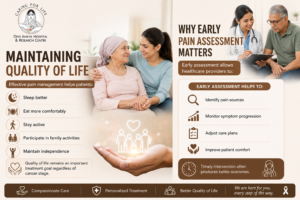
Maintaining Quality of Life
Effective pain management helps patients:
- Sleep better
- Eat more comfortably
- Stay active
- Participate in family activities
- Maintain independence
Quality of life remains an important treatment goal regardless of cancer stage.
Why Early Pain Assessment Matters
Early assessment allows healthcare providers to:
Early Assessment Helps To:
- Identify pain sources
- Monitor symptom progression
- Adjust care plans
- Improve patient comfort
Timely intervention often produces better outcomes.
Dr. Ajay Hardia’s Patient-Centered Approach
With more than 35 years of medical experience, Dr. Ajay Hardia has focused on holistic patient care, supportive treatment approaches, and comprehensive wellness strategies.
His Approach Emphasizes:
- Individualized care
- Compassionate support
- Patient education
- Holistic wellness
- Long-term guidance
Why Patients Choose Devi Ahilya Cancer Hospital
Patients often seek care because of:
Key Reasons Include:
- Personalized attention
- Holistic treatment philosophy
- Experienced medical leadership
- Supportive care services
- Focus on quality of life
Every patient receives care tailored to their specific condition and needs.
Supporting Patients Beyond Treatment
Cancer care extends beyond managing the disease itself.
Comprehensive Support May Include:
- Emotional counseling
- Lifestyle guidance
- Nutritional advice
- Family support
- Wellness monitoring
These services help patients navigate their journey with greater confidence.
Summary
Advanced cancer pain can significantly affect physical comfort, emotional well-being, and quality of life. Comprehensive pain management focuses on individualized care, symptom relief, supportive therapies, emotional support, and wellness-focused interventions. Through a patient-centered approach, cancer patients can experience greater comfort and improved daily functioning throughout their treatment journey.
FAQs – Advanced Cancer Pain Management in Indore
What causes cancer pain?
Cancer pain may result from tumor growth, nerve involvement, bone involvement, treatment side effects, or inflammation.
Can cancer pain be managed effectively?
Many patients experience significant improvement through comprehensive pain management strategies.
Why is early pain assessment important?
Early evaluation helps identify causes and allows timely intervention.
Does emotional health affect pain perception?
Yes, emotional stress and anxiety can influence how pain is experienced.
Why choose Devi Ahilya Cancer Hospital for supportive care?
The hospital focuses on patient-centered care, holistic support, wellness, and quality of life improvement.
Conclusion – Advanced Cancer Pain Management in Indore
Advanced Cancer Pain Management in Indore focuses on helping patients achieve greater comfort, better quality of life, and improved emotional well-being. Through individualized care, supportive therapies, nutritional guidance, and holistic treatment approaches, patients can receive comprehensive support throughout their cancer journey.